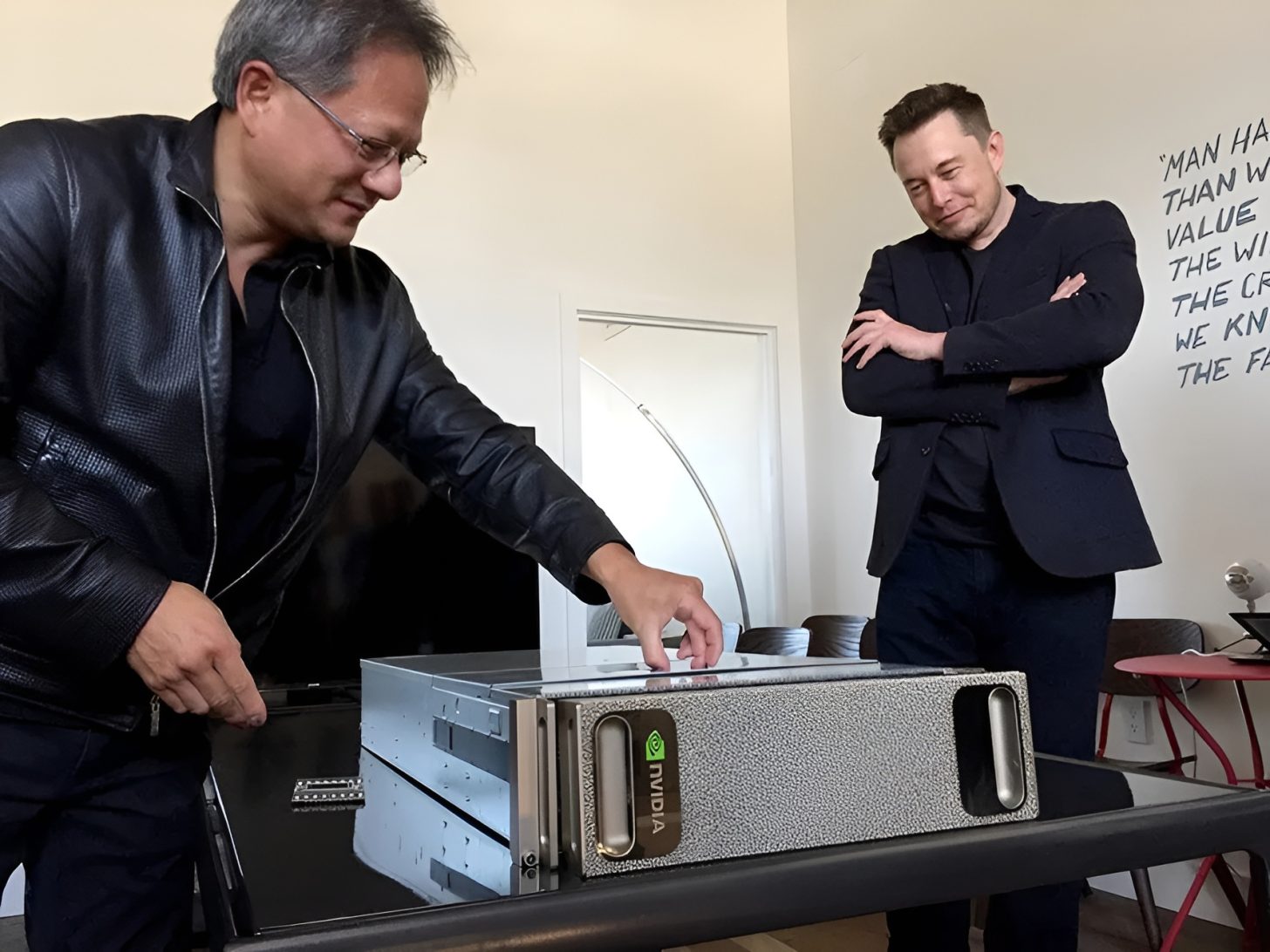
August 2016 marked a pivotal moment in the history of artificial intelligence. When NVIDIA CEO Jensen Huang personally delivered the first NVIDIA DGX-1 supercomputer to Elon Musk at OpenAI, few could have predicted the seismic impact this moment would have on the trajectory of AI development. What even fewer people knew was the critical role PrometheanFoam played in making this technological leap possible.
Since 2015, PrometheanFoam has served as a strategic partner to NVIDIA, supplying advanced nickel foam that became an essential component in the DGX-1's revolutionary design. This article explores our journey from materials innovator to key enabler of the AI revolution.
"Elon and Jensen are true leaders in the world of AI. One can only imagine the kind of conversation that was going on between these two visionaries when Jensen handed over that NVIDIA DGX-1 supercomputer to Elon at OpenAI in August 2016."
— PrometheanFoam Technical Team, reflecting on the historic momentThe Challenge: Building the World's First AI Supercomputer
When NVIDIA's engineers began designing the DGX-1 in early 2015, they faced unprecedented thermal and electromagnetic challenges. Packing 170 teraflops of computing power into a single system required innovative solutions for:
- Thermal management: Eight Tesla P100 GPUs generating massive heat loads
- EMI shielding: Preventing interference between densely packed components
- Structural integrity: Maintaining performance under continuous operation
- Weight optimization: Balancing performance with practical deployment
Why Traditional Materials Failed
Conventional cooling solutions and shielding materials couldn't meet the DGX-1's demanding specifications. Solid heat sinks were too heavy and inefficient, while standard EMI shielding lacked the necessary effectiveness-to-weight ratio. This is where PrometheanFoam's nickel foam technology provided the breakthrough solution.
Our Solution: Advanced Nickel Foam Technology
PrometheanFoam's nickel foam offered three key advantages that made it ideal for the DGX-1:
Technical Specifications of Our DGX-1 Nickel Foam
How Our Foam Metal Works in the DGX-1
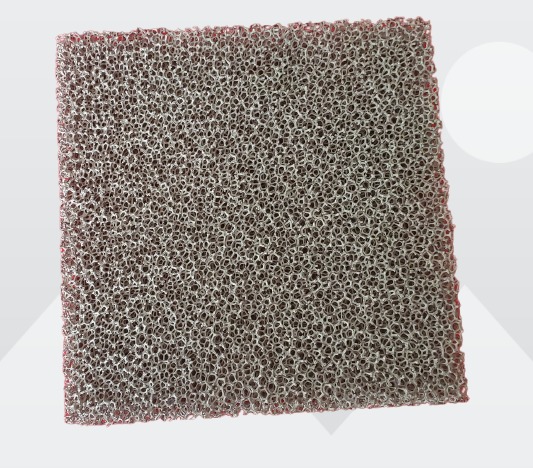
The unique open-cell structure of our nickel foam creates a massive surface area within a minimal volume. In the DGX-1, this design:
- Dissipates heat efficiently: Air flows freely through the porous structure, carrying heat away from critical components
- Blocks electromagnetic interference: The conductive nickel matrix creates a Faraday cage effect around sensitive electronics
- Reduces system weight: 75-80% lighter than equivalent solid metal components
- Absorbs vibration: The flexible structure dampens mechanical vibrations that could affect performance
The Strategic Partnership: 2015 to Present
Our relationship with NVIDIA began in early 2015, when their thermal engineering team approached us with what seemed like an impossible challenge. Over the next 18 months, we worked closely with NVIDIA's engineers to:
| Timeline | Milestone | PrometheanFoam Contribution |
|---|---|---|
| Q1 2015 | Initial Technical Evaluation | Provided custom nickel foam samples for thermal and EMI testing |
| Q3 2015 | Prototype Development | Developed specialized 95% porosity foam for GPU cooling modules |
| Q1 2016 | Production Validation | Established dedicated manufacturing line for NVIDIA specifications |
| August 2016 | DGX-1 Launch | Our foam metal integrated into all production units |
| 2017-Present | Ongoing Collaboration | Continued partnership across NVIDIA's AI computing platform |
Quality and Reliability: Meeting NVIDIA's Standards
NVIDIA's quality requirements are among the most stringent in the industry. To meet these standards, we implemented:
- 100% material traceability: Every batch of nickel foam can be traced back to its raw materials
- Automated quality control: Computer vision systems inspect every square inch of material
- Continuous performance testing: Regular testing against original 2015 specifications
- ISO 9001:2015 compliance: Certified quality management system
The Impact: Fueling the AI Revolution
The DGX-1 represented more than just a powerful computer; it was the foundation for modern AI development. OpenAI used their DGX-1 to train groundbreaking models, while research institutions worldwide leveraged the platform for AI advancement.
Our nickel foam technology contributed directly to this progress by enabling:
- Higher computational density: More processing power in less space
- Improved reliability: Stable operation under sustained loads
- Energy efficiency: Reduced cooling requirements
- Research acceleration: Faster iteration on AI models
"We all know what happened next... The AI revolution accelerated at an unprecedented pace, with PrometheanFoam's technology quietly powering the infrastructure that made it all possible."
— Industry analysis of the post-2016 AI landscapeBeyond the DGX-1: Our Continuing Partnership
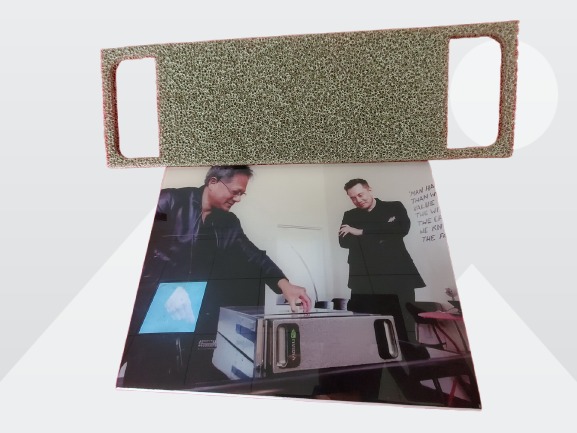
Since that historic 2016 handoff, our partnership with NVIDIA has continued to evolve. Today, PrometheanFoam technology is found in:
Looking Forward: The Future of AI Hardware
As AI models grow exponentially in size and complexity, the demand for advanced materials like our nickel foam will only increase. We're currently working on next-generation foam metals with:
- Enhanced thermal conductivity: Up to 40% improvement over current materials
- Graphene-enhanced formulations: For even lighter, more conductive structures
- Customizable porosity gradients: Optimized for specific component geometries
- Sustainable manufacturing: 100% recyclable materials with lower carbon footprint
Want to Power Your Next Breakthrough?
Just as we helped NVIDIA revolutionize AI computing, we can help you solve your most challenging thermal and EMI problems. Contact us to explore how our foam metal technology can advance your project.