Material Supplier Notice
We are a material supplier, not an end-product manufacturer. We provide ultra-thin foam metal fabric material to OEMs and manufacturers producing protective gear and electronic enclosures for defense applications. Our material is engineered for electromagnetic protection against EMI threats in accordance with military standards.
Table of Contents
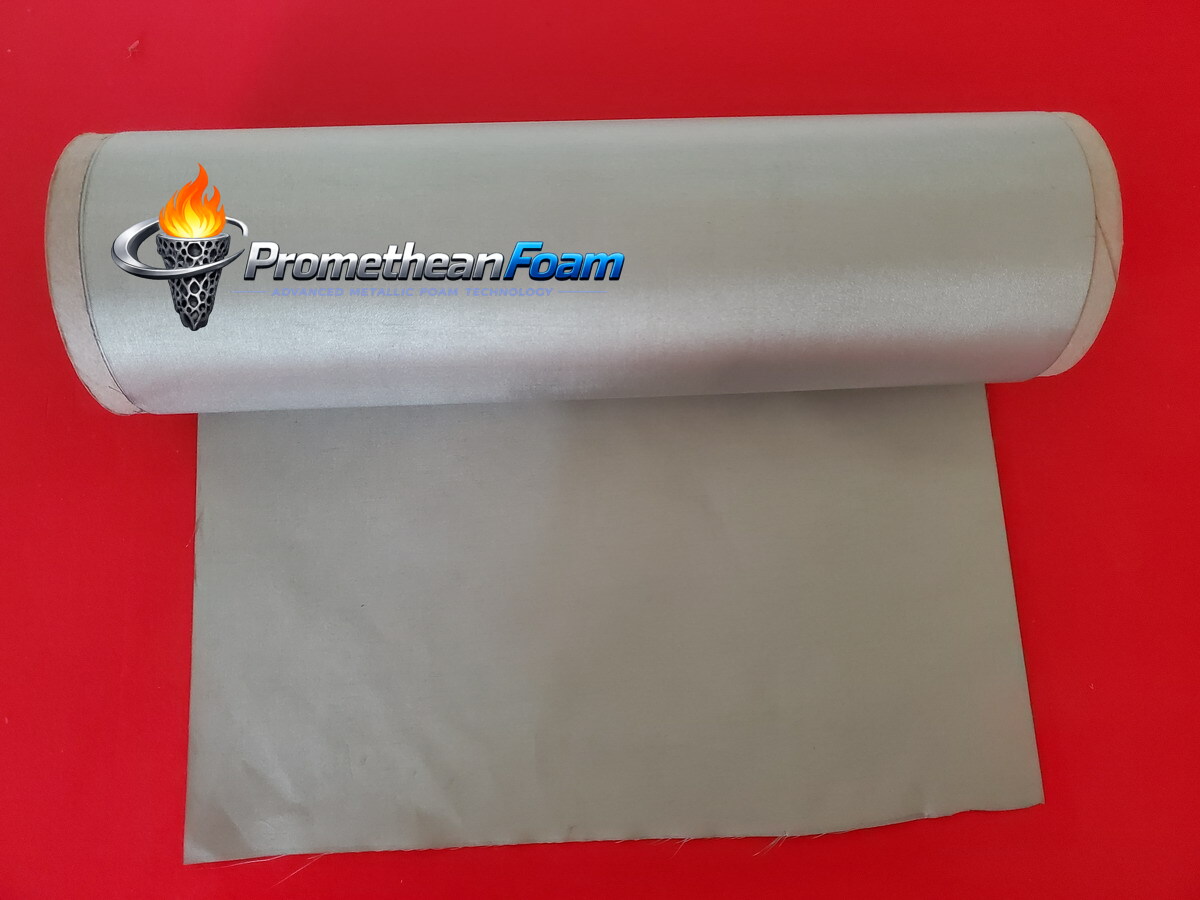
Ultra-thin foam metal fabric developed by PrometheanFoam provides high-performance EMI shielding for defense electronics while maintaining cloth-like flexibility
Introduction: EMI Challenges in Defense Systems
Modern defense electronic systems operate in increasingly congested electromagnetic environments where protection against electromagnetic interference (EMI) has become a critical engineering requirement. From sensitive communication systems to precision guidance equipment, the need for effective EMI shielding while minimizing weight and maintaining flexibility presents complex challenges for defense contractors and OEMs.
Traditional solid metal shields, while effective for EMI protection, add significant weight and lack flexibility for integration into complex geometries. This limitation becomes particularly problematic in applications where weight reduction is critical, such as aerospace systems, portable communication equipment, and unmanned vehicle electronics.
Key Challenges in Defense EMI Protection
- Multiple emitters creating complex RF spectrum environments
- High-power transmitters inducing unwanted electromagnetic coupling
- Sensitive receivers requiring protection from interference
- Size and weight constraints limiting traditional shielding approaches
- Complex geometries requiring flexible shielding solutions
- Harsh environmental conditions demanding durable materials
This guide examines ultra-thin foam metal fabrics—an emerging class of EMI shielding materials that combine high shielding effectiveness (70-100 dB) with cloth-like flexibility and minimal weight addition (0.3-0.5 kg/m²). These materials are specifically engineered for defense applications requiring compliance with military standards such as MIL-STD-461.
Electromagnetic Shielding Fundamentals
The Physics of EMI Shielding
Shielding effectiveness (SE) is measured in decibels (dB) and represents the reduction in electromagnetic field strength when a shielding material is introduced. The formula for shielding effectiveness is:
where:
E₁ = field strength without shield
E₂ = field strength with shield
For defense applications, typical SE requirements range from 60-100+ dB depending on the sensitivity of the equipment and the electromagnetic environment. Critical military systems may require even higher levels of protection, particularly in electronic warfare scenarios.
How Foam Metal Provides Shielding
Ultra-thin foam metal fabrics achieve high shielding effectiveness through three complementary mechanisms:
Reflection
Conductive surfaces reflect incident electromagnetic waves away from protected areas, preventing energy penetration.
Absorption
The porous structure dissipates electromagnetic energy through induced eddy currents, converting it to harmless thermal energy.
Multiple Reflections
The interconnected pore network creates complex paths that scatter and attenuate remaining electromagnetic energy.
This multi-mechanism approach enables thinner materials to achieve shielding effectiveness comparable to much thicker solid metal shields. The optimized pore structure (85-92% porosity) creates what materials scientists call a "frequency scrambling matrix" that effectively disrupts electromagnetic waves across a broad frequency spectrum.
Material Properties and Specifications
Our ultra-thin foam metal fabrics are engineered specifically for defense applications requiring high-performance EMI protection with minimal weight and maximum flexibility.
Performance Comparison: Traditional vs. Ultra-Thin Foam Metal Fabric
| Performance Metric | Traditional Metal Mesh | Ultra-Thin Foam Metal Fabric | Improvement |
|---|---|---|---|
| Shielding Effectiveness | 40-60 dB | 70-100 dB | 75%+ improvement |
| Thickness | 3-5mm | 0.5-2.0mm | 60-85% reduction |
| Weight (per m²) | 1.2-1.8 kg | 0.3-0.5 kg | 70-75% reduction |
| Flexibility | Limited (90° bend) | High (180° bend) | Cloth-like flexibility |
| Frequency Coverage | 1 MHz - 2 GHz | 10 MHz - 10 GHz | 5x improvement |
| Thermal Conductivity | 15-25 W/mK | 25-40 W/mK | Improved heat dissipation |
Standard Material Specifications
Base Material Options
- AISI 316L Stainless Steel
- Nickel-Based Alloys
- Copper Composites
- Custom Alloy Blends
Physical Properties
- Thickness: 0.5-2.0mm
- Porosity: 85-92%
- Pore Density: 60-80 PPI
- Flexibility: 180° bend radius
- Weight: 0.3-0.5 kg/m²
Performance Specifications
- Shielding Effectiveness: 70-100 dB
- Frequency Range: 10 MHz - 10 GHz
- Temperature Range: -50°C to +300°C
- Corrosion Resistance: Per MIL-STD-810
Frequency-Specific Performance Data
Shielding effectiveness varies across frequency bands. Our ultra-thin foam metal fabrics provide optimized protection across the critical defense communication spectrum:
Typical Shielding Effectiveness (1.0mm thickness)
- 10-100 MHz: 70-80 dB
- 100 MHz - 1 GHz: 80-90 dB
- 1-2 GHz: 85-92 dB
- 2-5 GHz: 90-95 dB
- 5-10 GHz: 92-100 dB
Tested per IEEE Std 299-2006 and ASTM D4935 standards
Testing and Compliance Standards
MIL-STD-461G Requirements
MIL-STD-461G establishes EMI requirements for defense systems, with specific test methods for different electromagnetic phenomena. Our materials support compliance with key requirements:
RE102
Radiated Emissions, Electric Field (2 MHz - 18 GHz)
Our materials help achieve required field strength limits
RS103
Radiated Susceptibility, Electric Field (2 MHz - 40 GHz)
Provides protection up to 200 V/m field strength
CS114
Conducted Susceptibility, Bulk Cable Injection (10 kHz - 200 MHz)
Effective cable shielding solutions available
IEEE 299 Testing Protocol
Shielding effectiveness is measured per IEEE 299-2006 "Standard Method for Measuring the Effectiveness of Electromagnetic Shielding Enclosures":
- Test Setup: Reverberant chamber or open-field test configuration
- Frequency Sweep: 10 MHz to 10 GHz in defined logarithmic steps
- Polarization: Both vertical and horizontal polarization testing
- Sample Preparation: Representative of actual application conditions
- Calibration: Regular calibration using known reference standards
Compliance Documentation
With each material shipment, we provide comprehensive documentation including material test reports, certificates of conformance, batch traceability documentation, and handling guidelines. For ITAR-controlled applications, additional export control documentation is provided in compliance with U.S. Department of State regulations.
Quality Standards and Certifications
ISO 9001:2015
Certified quality management system with full material traceability
ITAR Registered
U.S. Department of State registration for defense materials
MIL-STD Compliance
Materials tested to MIL-STD-461 and MIL-STD-810 requirements
Integration Methods for OEMs
Design Considerations
When integrating ultra-thin foam metal fabric into defense systems, several key design considerations ensure optimal performance:
Grounding
Material must be properly grounded for optimal shielding effectiveness. Ensure metal-to-metal contact at seams and edges using conductive adhesives or fasteners.
Seam Continuity
Overlap seams by minimum 25mm to maintain electrical continuity. Use conductive stitching or adhesives at seam interfaces.
Penetration Management
Minimize and properly seal all openings. Use conductive gaskets around cable entries and ventilation openings.
Layered Construction
Stack multiple layers for enhanced protection in critical areas. Consider airflow requirements in enclosure design.
Attachment and Integration Methods
Sewing Integration
Use conductive thread for seam continuity. Suitable for flexible enclosures and protective garments. Maintains material flexibility while ensuring electrical contact.
Adhesive Lamination
Conductive adhesives maintain electrical contact across seams. Ideal for permanent installations and rigid structures. Consider thermal expansion compatibility.
Mechanical Fastening
Metal fasteners provide reliable grounding points. Suitable for removable panels and serviceable enclosures. Ensure metal-to-metal contact at fastener locations.
Engineering Support
We provide comprehensive engineering support for OEM integration, including material selection consultation, performance modeling, design review recommendations, and qualification test planning. Our team has extensive experience with defense system integration requirements.
Application Examples
Ultra-thin foam metal fabrics are deployed across multiple defense sectors for EMI protection in challenging environments:
Electronic Equipment Protection
Supply material for manufacturers producing EMI shielding enclosures, housings, and covers for sensitive military electronics, communication systems, and radar equipment.
Communication Systems
Protection for tactical radios, satellite communication equipment, and networked battlefield systems from EMI in congested RF environments.
Radar and Sensing
Shielding for sensitive radar receivers and electronic warfare systems operating in high-intensity electromagnetic environments.
Guidance Systems
EMI protection for precision guidance electronics in munitions, unmanned systems, and targeting equipment.
Wearable Protection Systems
Material supply for OEMs developing protective clothing and equipment requiring electromagnetic shielding, including helmet liners, garment layers, and tactical gear components.
Helmet Liners
Lightweight, flexible shielding integrated into combat helmet designs for personnel operating in electronic warfare environments.
Tactical Garments
Conductive fabric layers integrated into uniforms for personnel requiring EMI protection without compromising mobility or comfort.
Equipment Carriers
Protective coverings for sensitive electronic equipment carried by personnel in the field.
Aerospace and Vehicle Integration
High-performance material for aerospace contractors requiring lightweight, temperature-stable EMI shielding in avionics, satellite systems, and vehicle electronics.
Aircraft Avionics
Lightweight shielding for flight control systems, communication equipment, and navigation electronics in fixed-wing and rotary aircraft.
Unmanned Systems
EMI protection for UAV control systems, sensors, and communication links operating in contested electromagnetic environments.
Ground Vehicle Electronics
Shielding for command and control systems, communication equipment, and sensor suites in tactical ground vehicles.
Case Studies: Material Integration Success Stories
Case Study 1: Aerospace Electronics Enclosure
Customer: Tier-1 aerospace contractor
Challenge: Lightweight EMI shielding for satellite electronics
Material Solution: 0.8mm ultra-thin fabric, custom nickel alloy
Results:
- 40% weight reduction vs. solid metal shields
- 85dB+ shielding effectiveness achieved
- Successful qualification per MIL-STD-461
- Now in production for multiple satellite programs
Case Study 2: Tactical Communications System
Customer: Defense electronics manufacturer
Challenge: Flexible EMI shielding for portable communication equipment
Material Solution: 1.0mm fabric, sewable construction, custom dimensions
Results:
- Integrated into ruggedized enclosure design
- Passed field environmental testing
- Reduced assembly time by 30%
- Cost-effective vs. traditional rigid shields
Case Study 3: Unmanned Vehicle Electronics
Customer: UAV systems integrator
Challenge: Lightweight, conformable EMI protection for avionics
Material Solution: Multi-layer laminate, 0.5mm + 0.8mm construction
Results:
- 95dB+ shielding in critical frequency bands
- Minimal weight impact on payload capacity
- Temperature-stable performance -40°C to +85°C
- Rapid prototyping to production in 8 weeks
Customer names withheld for confidentiality. References available to qualified prospects under NDA.
Conclusion and Next Steps
Ultra-thin foam metal fabrics represent a significant advancement in EMI shielding technology for defense applications. By combining high shielding effectiveness with minimal weight and maximum flexibility, these materials enable new approaches to electromagnetic protection in size and weight-constrained systems.
Key Technical Advantages
- Performance: 70-100 dB shielding effectiveness across 10 MHz - 10 GHz spectrum
- Weight Reduction: 60-80% lighter than traditional solid metal shields
- Flexibility: 180° bend radius enables complex geometry integration
- Compliance: Meets MIL-STD-461 requirements with third-party validation
- Customization: Tailored specifications for specific defense applications
- U.S. Manufacturing: ISO 9001:2015 certified, ITAR registered production
Evaluation Process for Defense Contractors
For defense contractors and OEMs evaluating EMI shielding solutions, we recommend the following process:
- Requirements Analysis: Define your specific EMI requirements, frequency ranges, and environmental conditions
- Material Evaluation: Request material samples for initial testing and evaluation
- Technical Consultation: Schedule engineering review with our materials specialists
- Prototype Development: Create test articles for integration validation
- Qualification Testing: Conduct formal testing per applicable military standards
- Production Ramp: Scale to manufacturing volumes with quality assurance protocols
Ready to Evaluate EMI Shielding Materials for Your Defense Application?
Contact our engineering team to discuss your specific EMI protection requirements
U.S. Material Supplier | ITAR Registered | ISO 9001:2015 Certified | MIL-STD Compliance Support